Best AI Note-Taking App for Nursing Students (2026)

Nursing school is relentless: pharmacology, path, med-surg, and clinicals all at once, then the NCLEX waiting at the end. The volume is enormous and the exam doesn’t test recall of facts so much as applying them — prioritization, delegation, and select-all-that-apply (SATA) questions. Generic note apps capture the lecture and stop there. This guide covers what a nursing student actually needs from an AI note-taker, and the stack that delivers it in 2026.
Quick answer: for turning lectures, PDFs, and notes into structured summaries, flashcards, and practice quizzes with spaced repetition, Studr is the strongest all-round fit. Add a dedicated NCLEX question bank for exam-specific practice.
On this page:
- Why nursing school breaks generic note apps
- What to look for
- The stack we recommend
- A realistic weekly workflow
- FAQ
Why nursing school breaks generic note apps
Three things make nursing study unusual:
- Sheer content volume. Multiple content-dense courses run in parallel, and each one has its own drug lists, lab values, and disease processes to memorize.
- Application over recall. The Next-Gen NCLEX (NGN) tests clinical judgment — SATA, prioritization, and case studies — not just definitions. You need practice questions, not just notes.
- Retention over months. What you learn in first-semester pharm still shows up on the NCLEX. Cramming doesn’t survive that timeline; spaced repetition does.
An app that only records or stores notes solves the easy part. Converting all of it into flashcards and NCLEX-style practice you can drill is where the real work is.
What to look for
- Handles PDFs and audio. Nursing pulls from recorded lectures and dense reading — you need both as inputs.
- Generates flashcards and quizzes. Drug names, mechanisms, lab values, and nursing interventions are ideal flashcard material; quizzes rehearse application.
- Structured summaries. Output organized by concept beats a raw transcript for high-volume content.
- Spaced repetition. Non-negotiable for retaining material from first semester through the NCLEX. See how to study from recorded lectures.
- Fast turnaround. With this much material, every minute saved per lecture compounds.
The stack we recommend
1. Studr — best all-round for coursework and retention
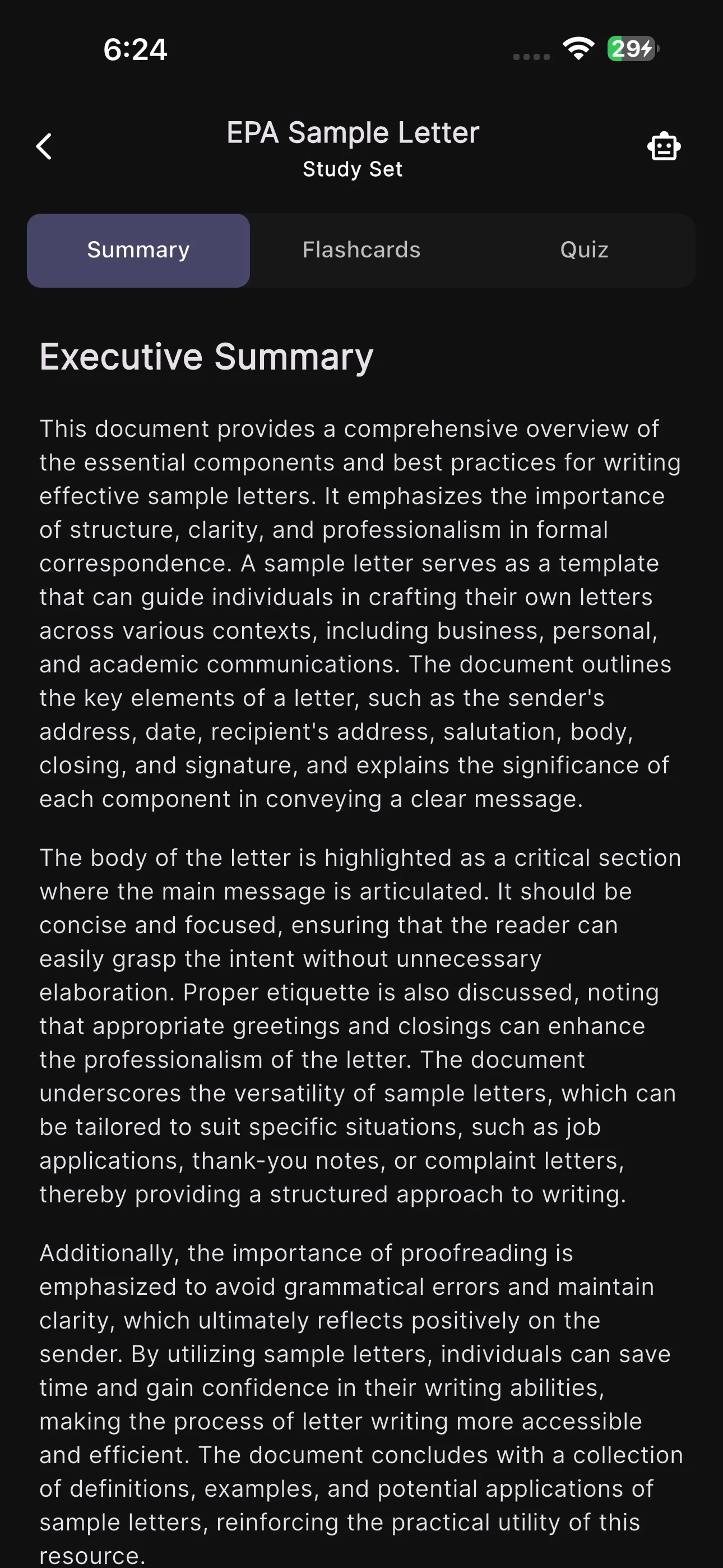
Studr ingests recorded lectures, PDF readings, and YouTube explainers, returns a structured summary, and generates flashcards plus a quiz from each — with spaced repetition built in. A pharmacology lecture becomes a drug-and-mechanism deck automatically; a med-surg reading becomes a quiz you can retake before the exam.
- Best for: turning lectures and readings into drillable material with long-term scheduling
- Pricing: one free upload to try it, then $14.99/month, or $89.99/year (about $7.50/month)
- Trade-off: general-purpose, so pair it with an NCLEX-specific bank for exam-format practice
2. A dedicated NCLEX question bank — for exam-format practice
Nursing-specific platforms provide thousands of NGN-style questions (SATA, prioritization, case studies) with rationales written the way the exam thinks. Use one of these for realistic test practice, and use Studr to turn your own lectures into the underlying flashcards. This is the same “study tool + specialist tool” split we recommend for medical students.
3. A visual/mnemonic resource — for the memory-heavy pieces
Drug suffixes, lab-value ranges, and disease processes stick better with mnemonics and visuals. A dedicated visual-learning resource complements the text-based flashcards Studr generates.
4. Whatever you record lectures with
If your program’s lectures are single-speaker, Studr can take the recording directly. For heavy multi-speaker clinical debriefs, a transcription specialist may capture them more cleanly — see Studr vs Otter.
A realistic weekly workflow
- Before class: drop each assigned reading (PDF) into Studr → structured summary + starter flashcards.
- In class: record the lecture; don’t try to transcribe every word.
- After class: upload the recording → summary + flashcards + quiz. Merge with the reading deck.
- Across the term: run spaced repetition a few times a week so pharm and lab values stay fresh.
- NCLEX prep: drill NGN-style questions in a dedicated bank, and use Studr’s quizzes and decks to shore up weak content areas the bank surfaces.
The payoff is a deck that’s been growing since first semester — exactly what NCLEX retention rewards — instead of a frantic rebuild in your final weeks.
FAQ
What’s the best AI note-taking app for nursing students?
For most nursing students, Studr is the strongest all-round choice: it turns both readings (PDFs) and lectures (audio) into structured summaries, flashcards, and quizzes with spaced repetition. Pair it with a dedicated NCLEX question bank for exam-format (SATA, prioritization) practice.
Can AI help me study for the NCLEX?
Yes — AI tools speed up the two biggest tasks: converting your course material into flashcards and generating practice questions. For the exam itself, use an NCLEX-specific bank with NGN-style questions and rationales, and use a tool like Studr to keep the underlying content fresh with spaced repetition.
Is it safe to rely on AI summaries for clinical content?
Treat AI output as a study aid, not a clinical source. Always verify drug data, dosages, and lab values against your textbook or an authoritative reference. AI summaries are a fast starting point; clinical accuracy is on you.
Can I upload my lecture recordings and slides?
Yes — Studr accepts audio recordings, PDF slides and readings, and YouTube URLs, and produces summaries, flashcards, and quizzes from each. Only upload material you’re permitted to; check your program’s policy on professor-provided content.
Do I need more than one app?
Most nursing students do best with a small stack: Studr to generate study material from their own lectures, an NCLEX bank for exam-format questions, and optionally a visual/mnemonic resource. Keep it small — too many tools adds friction.
The bottom line
Nursing school rewards students who convert a huge volume of material into repeated, applied practice and keep it fresh for months. A note app that only captures leaves that to you; one that turns lectures and readings into flashcards and quizzes with spaced repetition does the heavy lifting. Try Studr free — your first lectures and readings are included.
Related reading: best AI note-taker for medical students and best free AI note-taking apps for students.